EN
EN

Steam quality in industrial applications directly impacts operational efficiency, equipment longevity, and process reliability. When steam carries excessive pressure or superheat, it can create operational challenges ranging from equipment damage to inconsistent process performance. A pressure reducing and desuperheating system addresses these critical issues by precisely controlling steam conditions to deliver optimal quality for downstream applications.
Understanding how a pressure reducing and desuperheating system transforms steam characteristics requires examining the fundamental mechanisms involved in pressure reduction and temperature control. These systems work through coordinated processes that simultaneously address pressure levels and superheat content, resulting in steam that meets specific application requirements while maintaining consistent quality parameters throughout operation.
The Mechanism of Pressure Reduction in Steam Systems
Throttling Process and Pressure Drop
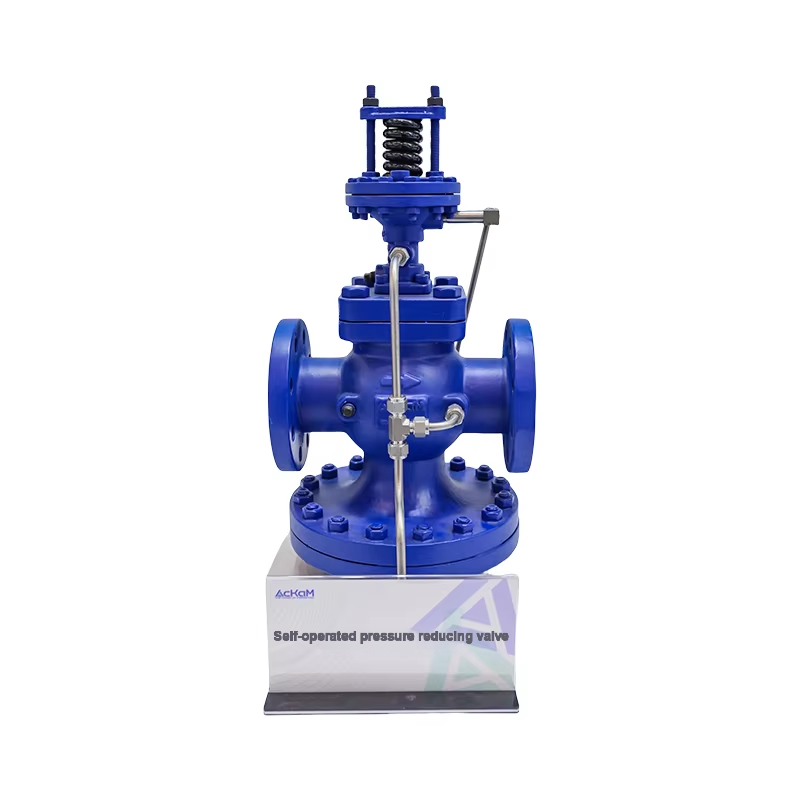
The pressure reduction component of a pressure reducing and desuperheating system operates through controlled throttling, where steam passes through a restriction that creates a deliberate pressure drop. This throttling process occurs across a valve mechanism designed to maintain downstream pressure at predetermined setpoints regardless of upstream pressure variations. The system responds dynamically to load changes, ensuring consistent pressure delivery.
During the throttling process, steam expands as it moves from high pressure to lower pressure conditions. This expansion affects the steam's thermodynamic properties, including temperature and specific volume. The pressure reducing and desuperheating system compensates for these changes through integrated control mechanisms that monitor and adjust operating parameters in real-time.
The effectiveness of pressure reduction depends on the valve design, sizing, and control system responsiveness. Modern systems incorporate advanced actuator technology and control algorithms that provide precise pressure regulation even under varying load conditions. This precision ensures that downstream equipment receives steam at optimal pressure levels for maximum efficiency.
Impact on Steam Velocity and Flow Characteristics
Pressure reduction fundamentally alters steam flow characteristics within the distribution system. As steam pressure decreases, its specific volume increases, which affects velocity profiles through piping networks. A well-designed pressure reducing and desuperheating system accounts for these velocity changes to prevent erosion, noise, and flow instability issues.
The controlled pressure reduction also eliminates pressure spikes and fluctuations that can damage sensitive downstream equipment. By maintaining stable pressure conditions, the system protects heat exchangers, control valves, and process equipment from pressure-related stress and fatigue. This protection extends equipment life and reduces maintenance requirements.
Flow distribution becomes more uniform when pressure is properly controlled. The pressure reducing and desuperheating system ensures that multiple downstream users receive steam at consistent pressure levels, preventing preferential flow to low-resistance paths and ensuring equitable distribution across the entire system.
Desuperheating Mechanisms and Temperature Control
Water Injection and Mixing Processes
The desuperheating function within a pressure reducing and desuperheating system typically employs controlled water injection to reduce steam temperature. This process involves introducing precisely metered water into the superheated steam flow, where rapid vaporization occurs. The latent heat of vaporization absorbs excess thermal energy, reducing the steam temperature to desired levels.
The water injection system must be carefully designed to ensure complete vaporization and uniform mixing. Incomplete vaporization can result in water carryover, which degrades steam quality and can damage downstream equipment. The pressure reducing and desuperheating system incorporates mixing chambers and residence time calculations to guarantee complete phase change.
Temperature sensors downstream of the mixing zone provide feedback to the control system, enabling precise temperature regulation. This closed-loop control maintains steam temperature within narrow tolerances regardless of inlet temperature variations or load changes. The responsive control prevents temperature excursions that could affect process performance.
Heat Transfer Efficiency and Thermal Management
Effective desuperheating requires optimal heat transfer between the injected water and superheated steam. The pressure reducing and desuperheating system design incorporates features that promote rapid heat transfer, including turbulent mixing, extended contact time, and appropriate residence volume. These design elements ensure efficient thermal energy dissipation.
The thermal management aspect extends beyond simple temperature reduction. The system must handle varying thermal loads while maintaining consistent outlet conditions. This capability requires sophisticated control algorithms that anticipate load changes and adjust water injection rates proactively rather than reactively.
Thermal shock prevention is another critical consideration in desuperheating operations. Rapid temperature changes can cause thermal stress in downstream equipment. The pressure reducing and desuperheating system moderates temperature transitions to protect sensitive components while still providing responsive control.
Steam Quality Enhancement Through Coordinated Control
Moisture Content Optimization
Steam quality, defined as the percentage of vapor in a steam-water mixture, directly affects heat transfer efficiency and equipment performance. A pressure reducing and desuperheating system improves steam quality by eliminating excessive superheat while preventing condensation that would reduce vapor fraction. This balance requires precise control of both pressure and temperature parameters.
The coordinated control approach ensures that pressure reduction and desuperheating occur simultaneously without creating conditions favorable to condensation. By maintaining steam in the superheated region while reducing excess temperature, the system delivers high-quality steam that maximizes heat transfer potential in downstream applications.
Moisture separation capabilities may be integrated into the pressure reducing and desuperheating system design to remove any entrained water droplets that could form during the conditioning process. This separation ensures that only dry, high-quality steam reaches process equipment, preventing efficiency losses and potential damage.
Consistency and Stability Improvements
Industrial processes require consistent steam conditions to maintain product quality and operational efficiency. The pressure reducing and desuperheating system delivers this consistency by buffering variations in source steam conditions and providing stable outlet parameters. This stability is particularly important in applications where steam quality directly affects product characteristics.
The system's ability to maintain consistent conditions extends to transient operations such as startup, shutdown, and load changes. During these periods, steam conditions can vary significantly without proper control. The pressure reducing and desuperheating system maintains stable output conditions throughout these operational transitions.
Long-term stability is achieved through robust control system design and component selection. The system must operate reliably over extended periods without drift in performance or control accuracy. This reliability ensures that steam quality improvements are sustained throughout the system's operational life.
Energy Efficiency and Economic Benefits
Reduced Energy Waste and Improved Utilization
Excessive steam pressure and superheat represent wasted energy that provides no additional benefit to most industrial processes. A pressure reducing and desuperheating system recovers this waste energy by conditioning steam to match application requirements precisely. This optimization reduces overall energy consumption and operating costs.
The energy recovery potential is particularly significant in systems with large differences between source steam conditions and application requirements. By eliminating unnecessary pressure and temperature levels, the pressure reducing and desuperheating system allows the steam generation system to operate more efficiently, reducing fuel consumption and emissions.
Improved energy utilization extends to downstream processes where properly conditioned steam provides better heat transfer performance. This enhanced performance can reduce steam consumption in individual applications, creating compounding energy savings throughout the facility.
Equipment Protection and Maintenance Reduction
High-pressure, superheated steam can cause accelerated wear and damage to downstream equipment not designed for these extreme conditions. The pressure reducing and desuperheating system protects valuable equipment investments by delivering steam within design parameters. This protection significantly extends equipment life and reduces replacement costs.
Maintenance requirements decrease when steam conditions are properly controlled. Equipment operating within design parameters experiences less stress, wear, and thermal cycling damage. The pressure reducing and desuperheating system's protective function translates directly into reduced maintenance schedules and lower maintenance costs.
The prevention of steam-related equipment failures provides additional economic benefits through improved reliability and reduced downtime. Unplanned outages due to steam system problems can cost significantly more than the investment in proper steam conditioning equipment.
Process Performance and Application Benefits
Enhanced Heat Transfer Efficiency
Many industrial processes are optimized for specific steam conditions that maximize heat transfer efficiency. When steam pressure and temperature exceed these optimal levels, heat transfer can become less efficient due to reduced temperature differentials or inappropriate thermodynamic properties. A pressure reducing and desuperheating system delivers steam at conditions that optimize heat transfer performance.
The improved heat transfer efficiency manifests in faster heating rates, more uniform temperature distribution, and better process control. These improvements are particularly noticeable in applications such as heating, drying, and sterilization where heat transfer rate directly affects process throughput and quality.
Process temperature control becomes more precise when steam conditions are properly regulated. The pressure reducing and desuperheating system enables tighter temperature tolerances by eliminating variations in steam properties that could affect heat transfer characteristics.
Operational Flexibility and Control
Industrial facilities often have diverse steam requirements across different processes and applications. A pressure reducing and desuperheating system provides the flexibility to serve multiple applications from a single high-pressure steam source while delivering optimized conditions to each user. This flexibility simplifies steam distribution system design and operation.
The enhanced control capabilities enable operators to fine-tune steam conditions for specific applications or operational requirements. This adjustability is particularly valuable in facilities with varying process demands or seasonal operational changes.
Process optimization becomes possible when steam conditions can be precisely controlled and adjusted. The pressure reducing and desuperheating system provides the control foundation necessary for implementing advanced process control strategies and optimization initiatives.
FAQ
What is the difference between pressure reduction and desuperheating in steam systems?
Pressure reduction involves decreasing steam pressure through controlled throttling, while desuperheating reduces steam temperature by removing excess thermal energy, typically through water injection. A pressure reducing and desuperheating system combines both functions to simultaneously control pressure and temperature, delivering steam at optimal conditions for downstream applications.
How does a pressure reducing and desuperheating system prevent equipment damage?
The system protects equipment by conditioning steam to match design parameters, preventing exposure to excessive pressure and temperature that could cause thermal stress, erosion, or mechanical failure. By maintaining stable steam conditions within equipment tolerances, the pressure reducing and desuperheating system extends equipment life and reduces maintenance requirements.
Can a pressure reducing and desuperheating system improve energy efficiency?
Yes, these systems improve energy efficiency by eliminating waste energy from excessive pressure and superheat, optimizing steam conditions for specific applications, and enabling better heat transfer performance. The energy savings come from reduced steam generation requirements and improved utilization efficiency in downstream processes.
What maintenance is required for a pressure reducing and desuperheating system?
Regular maintenance includes inspection and calibration of control valves, temperature and pressure sensors, water injection systems, and control loops. Periodic cleaning of strainers, checking of actuator operation, and verification of control system performance ensure reliable operation and maintained steam quality improvements throughout the system's service life.
Table of Contents
- The Mechanism of Pressure Reduction in Steam Systems
- Desuperheating Mechanisms and Temperature Control
- Steam Quality Enhancement Through Coordinated Control
- Energy Efficiency and Economic Benefits
- Process Performance and Application Benefits
-
FAQ
- What is the difference between pressure reduction and desuperheating in steam systems?
- How does a pressure reducing and desuperheating system prevent equipment damage?
- Can a pressure reducing and desuperheating system improve energy efficiency?
- What maintenance is required for a pressure reducing and desuperheating system?